Category Archives: Objects

chdk-ptp PKGBUILD

In another episode of fixing things for the Cameras as Computing Systems class I’m taking, I made a PKGBUILD that apparently correctly builds and installs chdk-ptp on Archlinux systems. Chdk-ptp is a tethered-control application for Canon cameras running CHDK, that hooks a variety of custom extensions to the ptp protocol. Their build system is a little lackluster, is missing things like an install rule, and requires a helper script be installed to do some path munging before running the binary, but the documentation is good enough to sort it out, and the program itself seems to work. My package depends on iup-all-bin from the AUR which also provides the cd dependency (not marked in its provides array, though there isn’t an official package to conflict with). I tried to use the built-from-source AUR packages for cd (Seriously, who thought that was a good name for a piece of software?) and iup, but iup was giving me a hassle and the chdk-ptp documentation suggests the binary distribution will be less trouble anyway.

The PKGBUILD format has changed a bit since I was last making my own- I like most of the changes in terms of clarity and modularity, but it does require a bit of re-learning. It also means I have a couple of pet packages that probably need attention.

The build is a little janky so despite it passing through namcap with only one expected warning, I don’t want to put it in the AUR until I’ve tested it enough to be reasonably sure it works as intended. I expect I will get around to that eventually.

Posted in Computers, DIY, Electronics, General, Objects, School | Tagged , , , , , , | Leave a comment

Gigabit to The Home BoF Opening Presentation

I gave the discussion-starting talk for this week’s CS departmental BoF session. The topic this week was “Unlimited Internet bandwidth – Would it be a game changer or no big deal?” My opening talk was just to get people up to date on the current events to kick off a discussion, though it is very similar to asking “What will we do with the internet” in the early ’80s, and thus rather difficult to suggest up plausible cases that aren’t “The same thing but faster.”

Callout:

Gigabit to the home is rapidly becoming a reality. Programmable hundred gigabit networks are already being constructed. Cellular networks are improving so fast that people are dumping their wired connections in favor of wireless. In short, networks are becoming so fast that one can begin to imagine a world where bandwidth is essentially unlimited.

But how would the world change if we had (essentially) unlimited bandwidth to everywhere? Would it change anything? Don’t most apps already have all the bandwidth they need? Aren’t networks already fast enough to support “the Cloud”? Have we already max’d out on bandwidth? Are there any super-cool apps that could still be enabled by even faster networks? If so, what are they? Will they be truly radical, or just an incremental improvement?

Come and find out at our next CS Bof, Friday, Nov 1 at 3pm when we will debate whether there are apps that will benefit from even faster network speeds. If there was unlimited bandwidth, what new apps could *you* see emerging? Join us Friday to dream about the possibilities and give your opinion.

Slides , Notes

In a related note, I’ve made slides for several presentations recently in Beamer, including this one, and I’m pretty convinced I’m never voluntarily using Powerpoint or any obstinate WYSIWYG slide system again. Beamer is a superior tool for the job for every kind of presentation using slides I’ve ever run into.

Posted in Computers, Entertainment, General, Objects, School | Tagged | Leave a comment

Makergear M2 Heated Bed Issue

There was a problem with the Lab’s Makergear M2 recently that is worth writing up.

Last weekend, we had it off site for a demo event for a group of highschoolers interested in engineering and medicine, which included assembling samples of these printable articulated hands that Dr. Dietz designed. (Semi-related: I’ve watched him do it, and continue to be mystified how he does things like this in OpenSCAD). We printed some models live, but on the last print of the trip it made a burning plastic smell. Not the usual, pleasing corn-syurp-y PLA-at-work smell, but acrid recently-deceased-electronics smell. We couldn’t locate the problem, and everything was working, so we assumed filament impurity and moved on.

M2RAMBO39530Melted

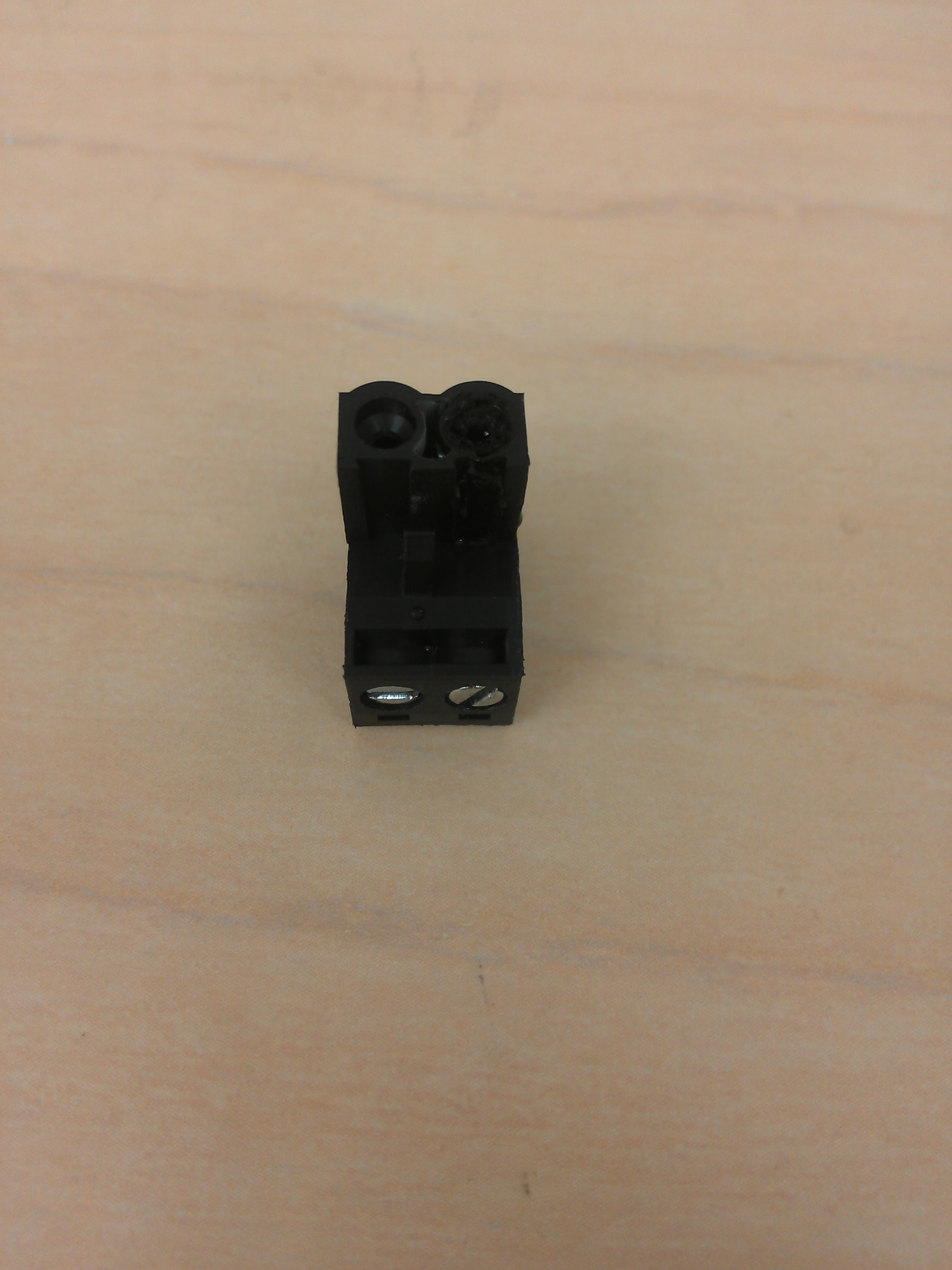
The next day, the bed stopped heating. Probing around with a DMM indicated the board was fine but the wire harness was not (A thank you to the Ultimachine folks for putting proper test points on the outputs). A bit of googling turned up this thread implicating the quick release screw terminal block that connects the bed leads to the board. Sure enough, upon yanking the connector free, the removable wire-side portion was a melted mass.

39530Melt

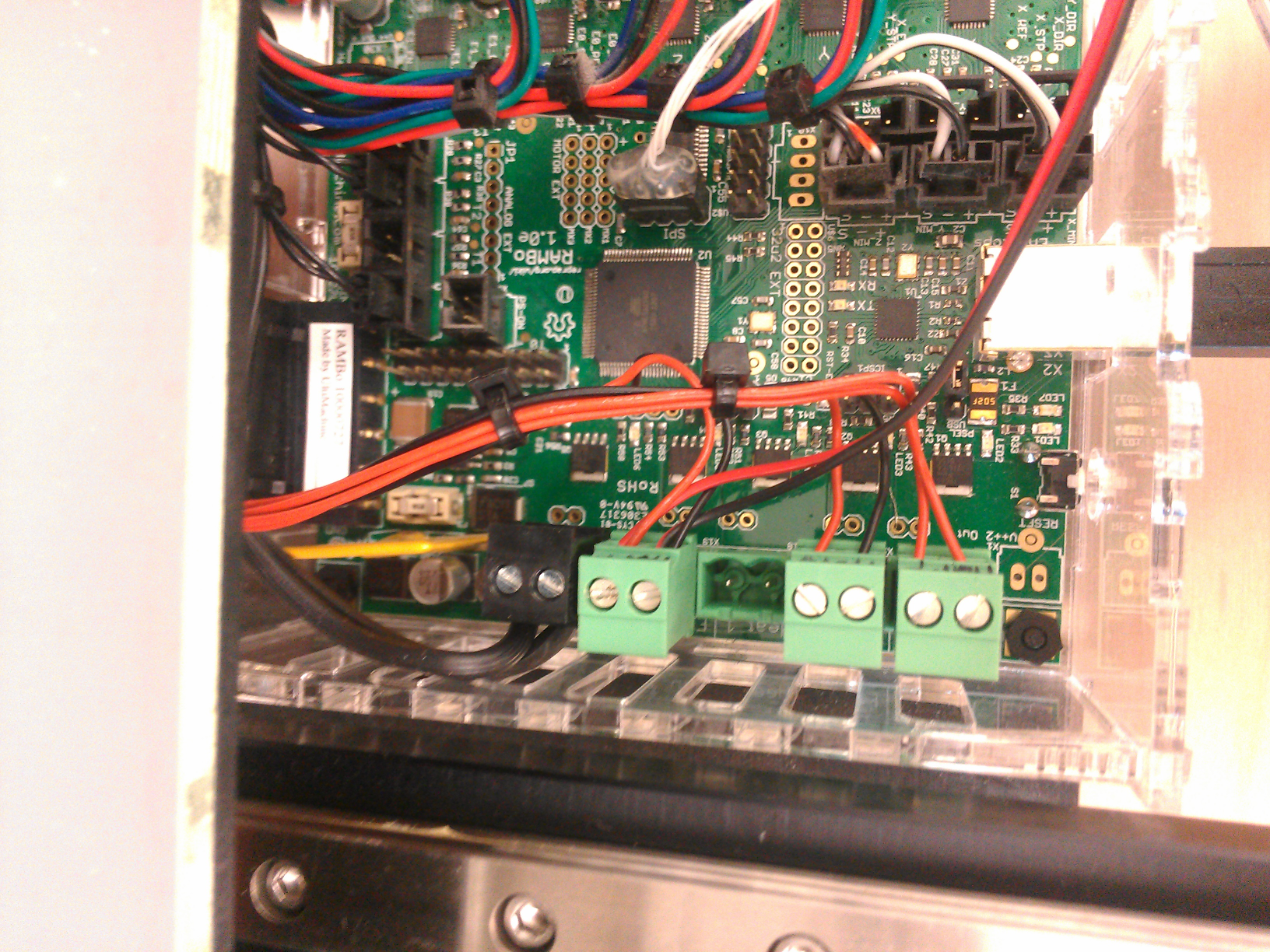
The existing connector is a Molex 39533-2002 rear-entry, two lead “Eurostyle” connector. Interestingly, Makergear and/or Ultimachine (Makergear buys and installs RAMBO Boards) used straight-through 5.08mm (200mil, but usually talked about in metric) quick release connectors – screws on the top, wires enter from the right – for the other MOSFET outputs, but a rear-entry (screws on the left, wires enter from the top) for the bed heat. This seemed odd since the side of the little laser-cut enclosure the RAMBO board lives in obscures the screw heads, but the reasoning will become clear. When I was poking at it to see if I could figure out what went wrong, I noticed the threads on the melted side were all but stripped out, but I don’t know if that was a cause or a symptom.

M2RAMBO39533

Since it is a standard connector, the (apparently intact) board side will mate with any two-position 3953x part. We found an ebay listing for five 39533-2002 for about $8 shipped, which are compatible and straight-through. Sadly, ebay is usually cheaper and faster than dealing with an electronics vendor if you only need one thing. The replacement seems to work fine, but clearly the original was a rear-entry model to keep the wires from being pressed against the side of the case. The M2’s wire harness is definitely its weak point; two of three serious intervention-requiring stoppages have been related to the bundle headed up to the bed/Y assembly.

The general lesson is to keep an eye on your screw terminals, especially if they are carrying current. I recall replacing the (non-quick-release) bed heater screw terminals on Collexion’s Makerbot ToM after a meltdown not long ago, so there is clearly a general issue with running that much current through screw terminals (several of the common crimped connectors would likely be superior in most ways). Since it came up (and since it is intuition-defying and I’ve heard a lot of people who should know better get it wrong) I’ll close with a reminder that you should not tin your wires before placing them in screw connectors – I know I’ve read this in a standard, research-backed source from ISO or NASA or somesuch, but I can’t find it right now.

ADDENDUM: It cooked two more of the same connector, then we discovered that the SD card connector was a little lose, and apparently causing a ground problem. It hasn’t cooked another connector since, and the bed heats faster than it was, so strong evidence that that was the root cause.

Posted in DIY, Electronics, General, Objects | Tagged , , | 3 Comments

The Best Science Fiction and Fantasy of The Year Vol. 7

While I’m writing up things I’ve done recently, I finished this year’s edition of the Jonathan Strahan edited The Best Science Fiction and Fantasy of the Year collection. As in previous years I’ll mention the high points.
Continue reading

Posted in Entertainment, General, Literature, Objects | Tagged | Leave a comment

Singer 201-2 Restoration

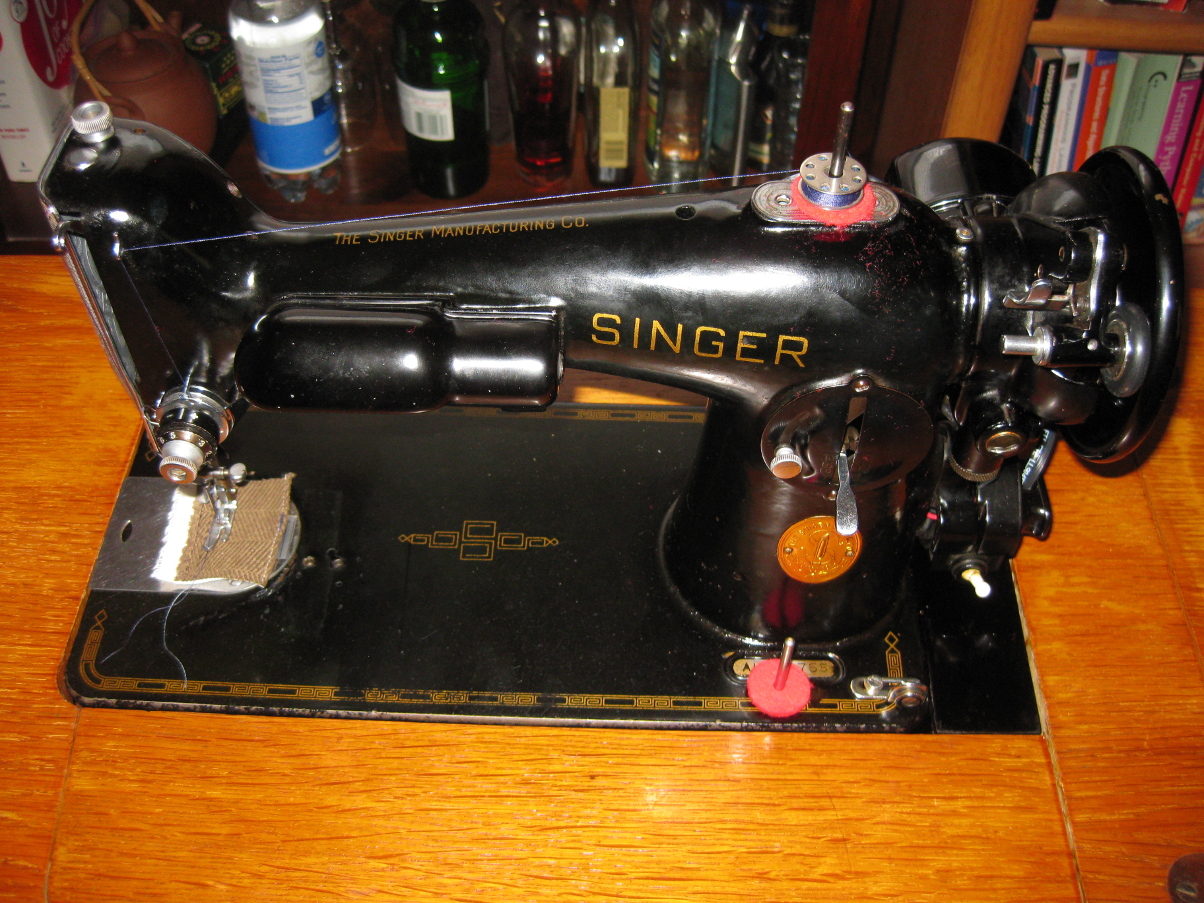
My 1947 Singer 201-2, S/N AH040755

I wrote about this machine once before a few years ago, but only brought it down to Lexington to work on it at the beginning of July. I’ve had a delightful time cleaning restoring it over the last couple weeks, and just wanted to post some pictures and musings. I did have it correctly identified before – it is a 1947 Singer 201-2, in good mechanical and OK cosmetic condition. The machine’s story from the family has settled on it being my great grandmother’s machine down the matrilineal line, but I don’t know if they were the original owner, or what exactly has happened to it over the last couple decades. My grandmother noted that she remembered her mother doing upholstery work on it, and my mother remembers using it as a child, and it was in my grandmother’s basement three years ago. Descriptions follow pictures below.
Continue reading

Posted in DIY, General, Objects | Tagged , , , | 21 Comments

N109 Thinkpad AC Adapters

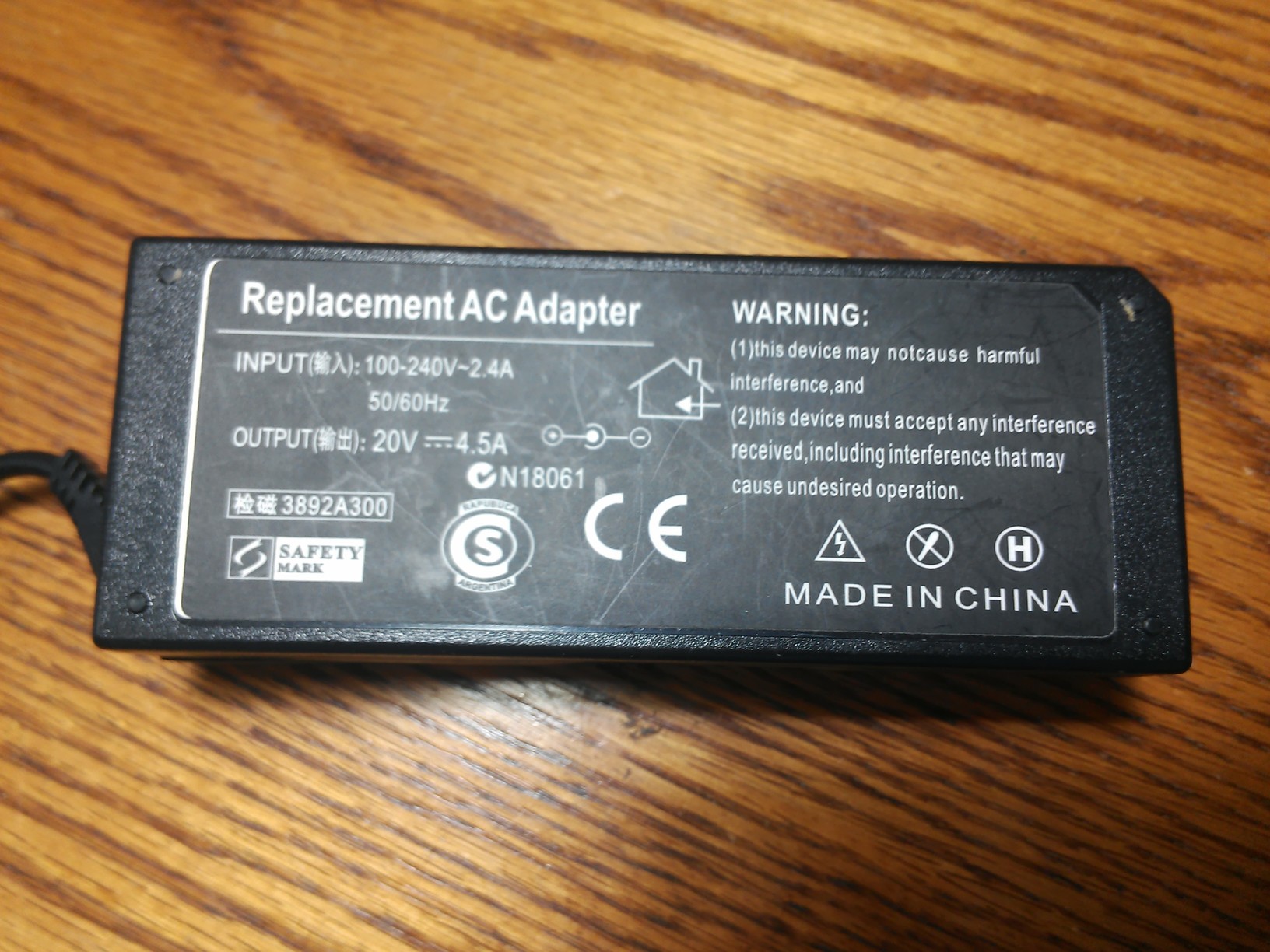
N109-6

Since I’ve been documenting failure modes in electronics, another tale of electronic woe regarding N109 type knockoff Lenovo 90W AC adapters. I have a couple T series ThinkPads, which conveniently all use the same 20V 90W supplies with the same connector. I noticed that the stress relief on one of my AC adapters was wearing, so, having had a streak of good luck buying various direct-from-China products, I bought a knockoff replacement adapter that way.
I would suggest that you don’t want do that.
Continue reading

Posted in Computers, DIY, Electronics, General, Objects | Tagged , , | Leave a comment

Thrunite T10 Repair

T10Bodymd

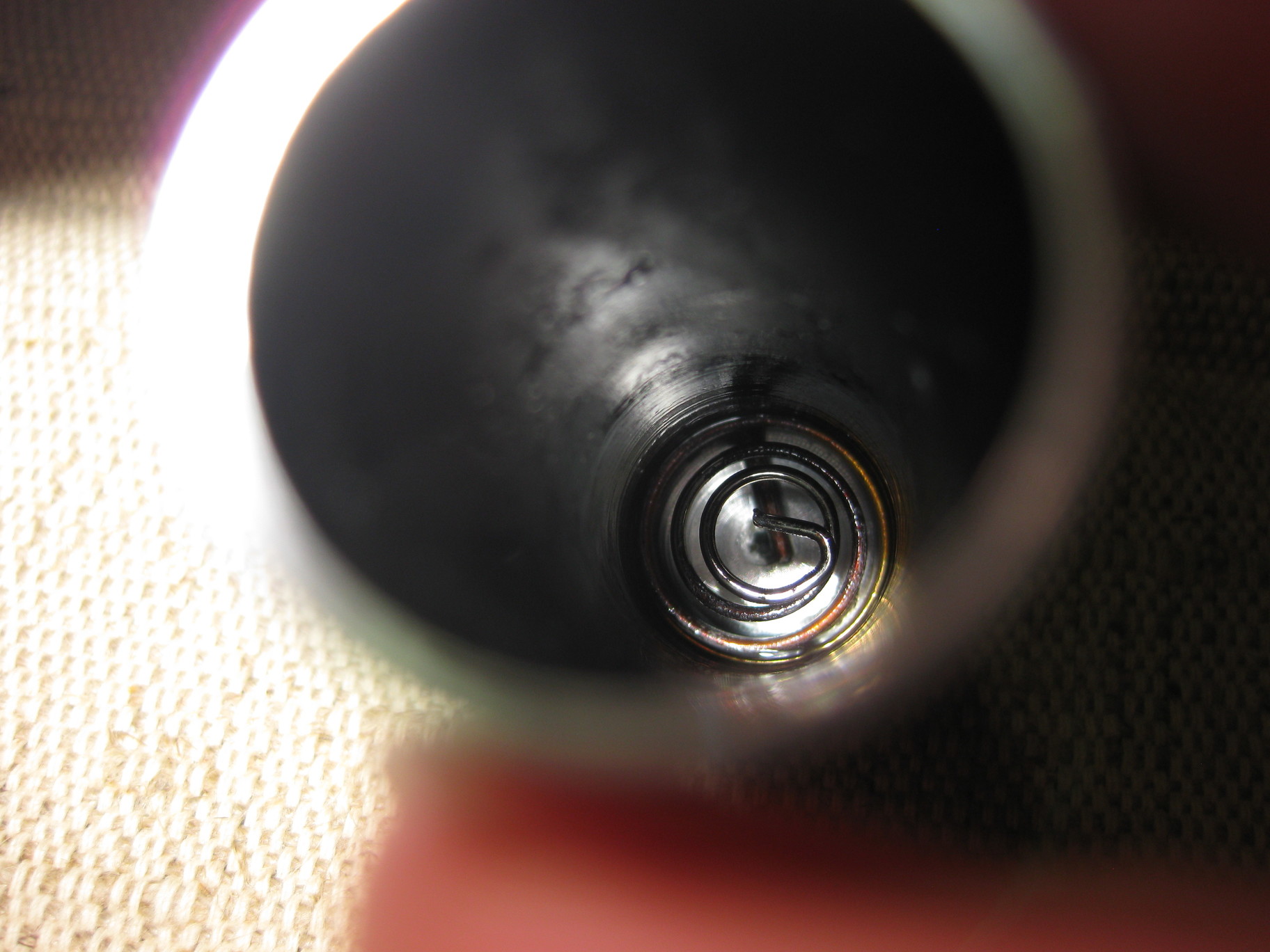
The Thrunite T10 light I’ve been carrying failed to come on when I reached for it the other day. It wasn’t a dead battery, and, yesterday, I determined that the 24mo warranty offers free repair contingent on you paying for shipping to and from Shenzhen, China, which comes out similar to the purchase price. I like my little T10, so this evening, I decided to fix it myself.

tl;dr: If you have a T10 die on you, it is likely to be the negative contact spring in the bottom of the body corroding/moving. Try cleaning and/or re-seating it.
Continue reading

Posted in DIY, Electronics, General, Objects | Tagged , | 3 Comments

Shapeoko: Part 6

SH7-8

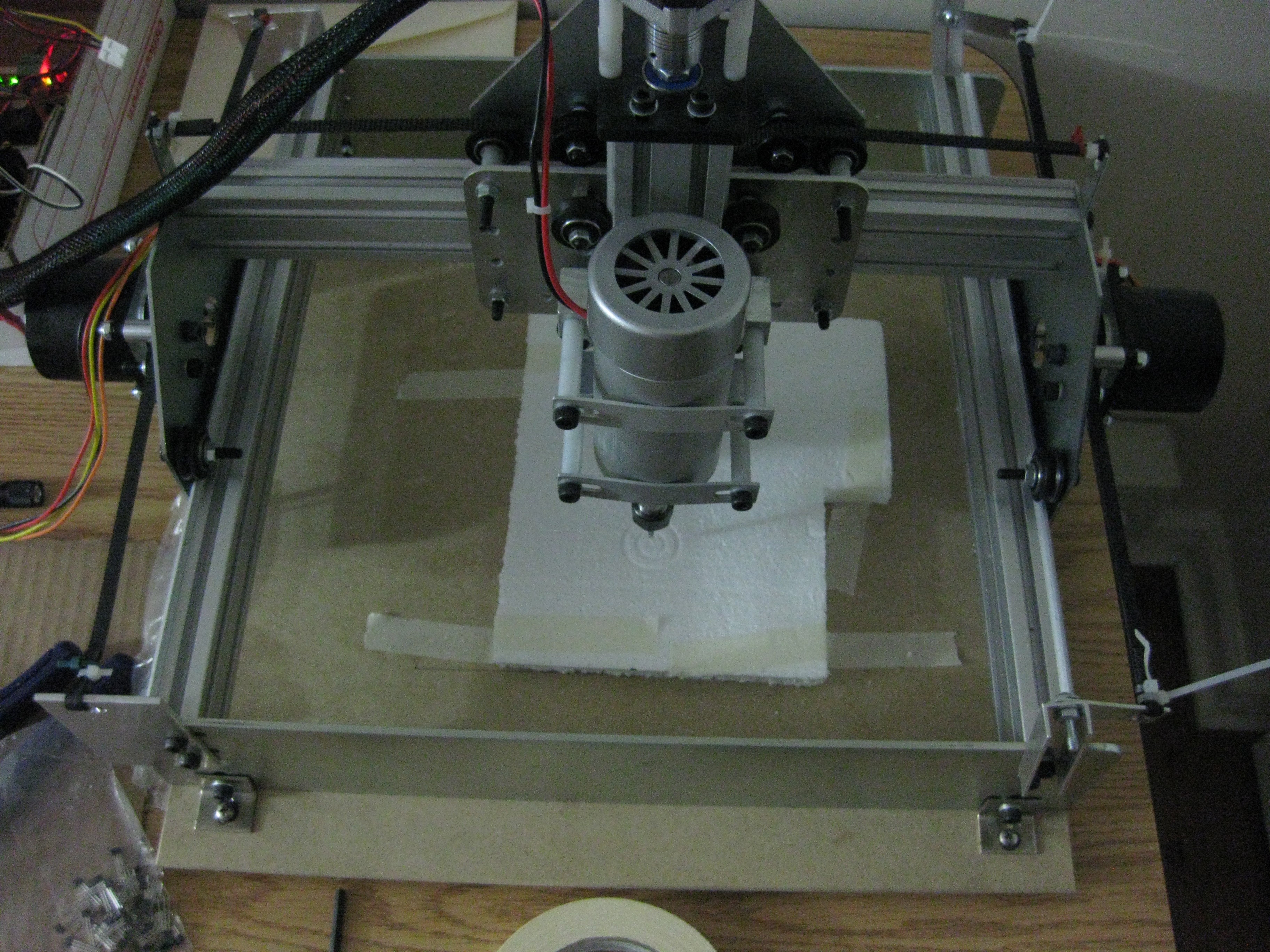
I’ve been working on my Shapeoko in little fits and spurts that individually haven’t been terribly documentation worthy, but in aggregate are pretty interesting. Continuing from where I left off in Shapeoko: Part 5, I’ve iterated a bit on belt tensioners, switched to a commercial breakout board, put the spindle under computer control, attached the spindle to the machine, made some tentative test cuts, and added hall-effect endstop/homing switches to the X and Y axes.
Continue reading

Posted in DIY, Electronics, Entertainment, General, Objects | Leave a comment

Babylon The Master Builder’s Puzzle Cube

BabylonSet

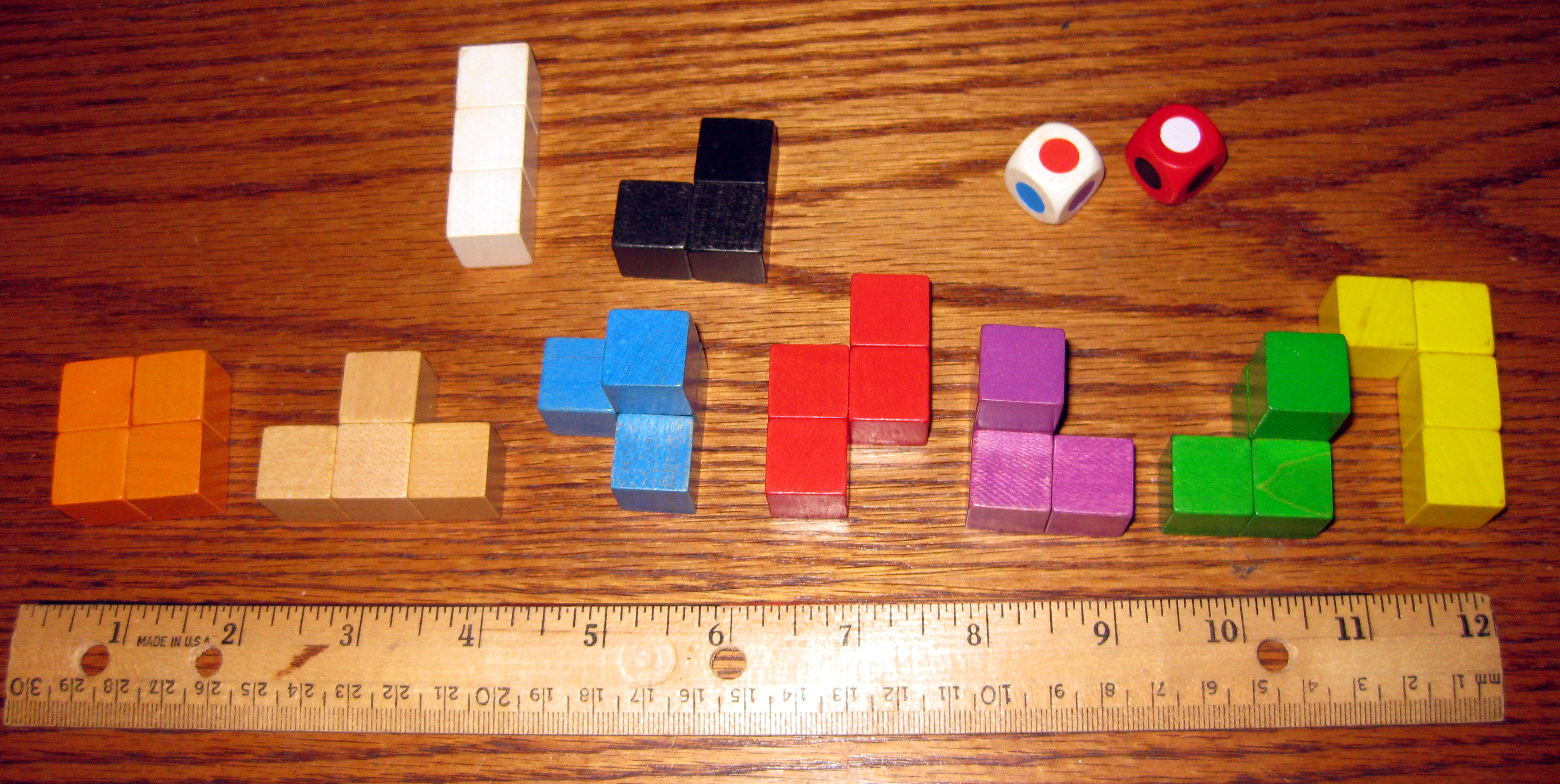
We have been printing out little puzzles to test dimensional accuracy on the 3D printer in the lab, and it reminded me of a cube puzzle I had as a kid, which is now rather difficult to find information on. I’m putting this on the ‘net largely because coming up with search terms to unify all the relevant information was nearly impossible – I had to go root around at my parent’s house to find my set to connect all the dots. It was the source of many ragequits as a child, and it would be a shame to deprive future generations of the same …stimulation.
Continue reading

Posted in DIY, Entertainment, General, Objects | Tagged , , | 9 Comments

Learning to LDP

I’ve wanted to learn to LDP (Long Distance Pump) since before I started skating. Every summer, I spend some time trying to learn to pump, and make minor adjustments to my setups to make it more practical, and for my efforts I could impart energy, but my setups have always been sufficiently sub-optimal that I only managed sustain speed with a pump a handful of times, and never accelerated.
LDParts_md

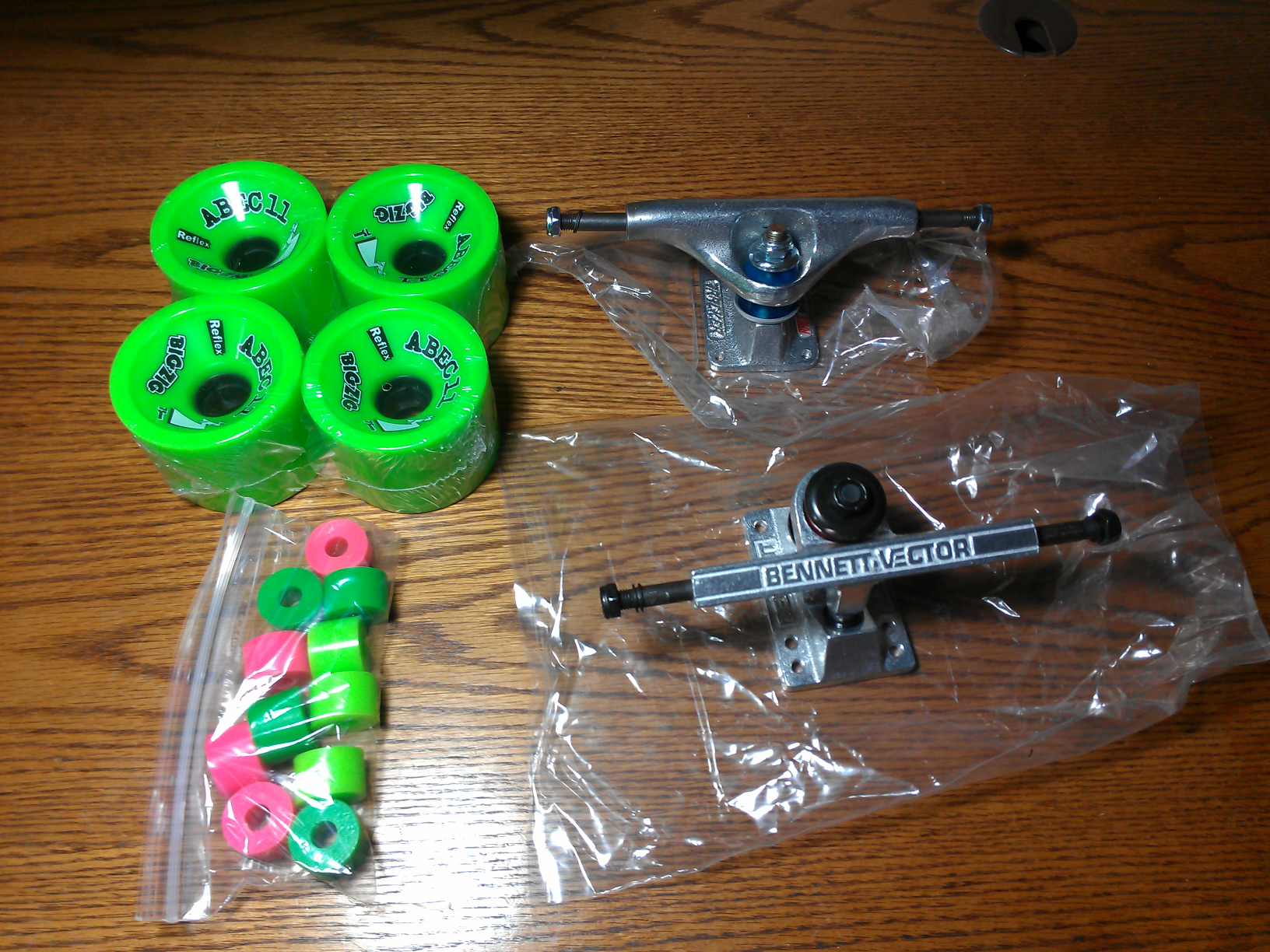
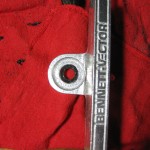
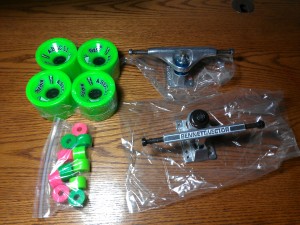
This summer I decided do it right. I bought the classic inexpensive LDP truck set (A Bennett Vector and a Tracker RTS, I picked the 5.0 and 129mm variants respectively), modded them for LDP, and installed them on my suitably sized deck with suitable bushings and wheels.

Distance skating attracts the best sort of crazies – It’s something of an equipment sport, so they tend to obsessively purchase and modify gear. It’s remarkably physically demanding, so there is a lot of the classic solo endurance sport mentality. It also has carryover from the “raah hardcore” skate world. Fortunately, the internet has brought together the appropriate crazies at sites like Pavedwave and skatefurther, where the discipline has been developed from its roots in the 70s.

Designed-for-LDP decks (Subsonic Pulse, LBL Walkabout, RoeRacing Mermaid, etc.) are boutique items and tend to cost in excess of $150 for the bare deck, so I wanted to ease in financially in smaller steps since I’m not sure how capable I’ll be. Most sources say 26″ to 31″ is suitable for an LDP wheelbase, and my Pakala III is around 25.6, so it is manageable if a little tight-pumping.

The mods for the trucks are pretty interesting, I implemented a number of the suggestions from this excellent thread on the pavedwave forums.

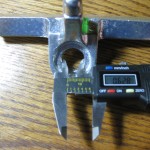
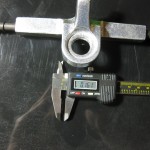
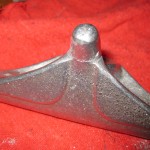
On the Bennett, I made myself a nice Polyoxymethylene(aka Delrin/Acetal) insert for the pivot. I think the technical name for this thing would be a bushing, but since that term is already in use for trucks, people have taken to calling these “hobo sphericals” or “fixed spehericals,” as the more elaborate alternative is to install a spherical bushing. I saw that Griffin sells fixed spehricals for Bennett trucks that look to be machined out of some flavor of Polyoxymethylene, looked at the sheet of 1/8″ Aceteal I had for another project, and decided to DIY. For those looking closely at the numbers, the insert is a little thinner than ideal (0.125″ sheet, gap depth measures around 0.16″) but it seems sufficient.

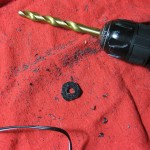
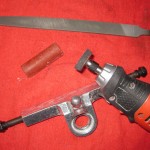
I hacked a small chunk off the sheet, held it under the truck pivot, and scribed the diameter into the sheet with a pin. I then did the typical chords-and-90°-angles center of a circle stunt, sanity checked it against a washer, and drilled the center to 25/64″ in a couple steps (starter drill, some intermediate size grabbed at random, 3/8″ because I wasn’t sure how sloppy I was being, then 25/64″) — Kingpins are 3/8, and it should slide freely, so a V letter drill would probably be technically correct, but I’ve never contrived an excuse to own a letter drill set, and was free-handing it with pliers and a handheld drill anyway, so 25/64. I then followed my scribe line with a coarse sanding drum chucked into a rotary tool, and fitted/finished it with a finer sanding drum. I’ve checked on it a couple times as I fiddle with the configuration, and it seems to be holding up and doing its job.

If I ever get my Shapeoko into shape for this sort of thing I should be able to punch out some nice precision parts for this on it.

On the RTS, I clipped the wings a bit with a file, as apparently the wings will chew up the pivot cup if you don’t. I then polished out the file marks and the whole pivot pin on both trucks with some tripoli compound and a felt wheel chucked up in a rotary tool.
Inital_LDP_Setup_md

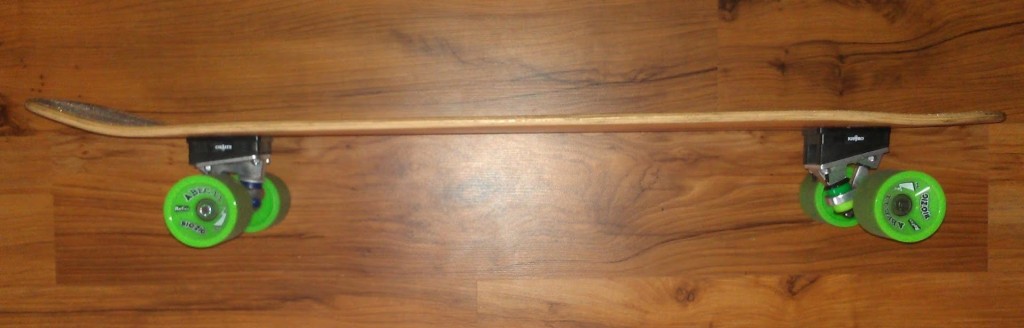
At the moment I have the Bennett wedged to +10°, with Green and Yellow tall Reflex barrels, and the RTS at -7° with some blue Khiro barrels I had around, both stacked on top of 3/4″ of risers to keep it from biting – gives a ~5″ ride height, which is not ideal.

I built up speed by pumping the first time I stepped on this thing (and then wheelbit, got some road rash on my elbow, installed some more risers, and accelerated again without the painful sudden deceleration). I’m still clumsy and slow pumping, and I’m sure the setup can be improved, but it feels wild, and the dedicated trucks make a world of difference.

Posted in DIY, Entertainment, General, Objects | Leave a comment