Source: Hacker News
Article note: Well, this should be interesting.
Comments Source: Hack a Day

Well, that was fast! Last week, we wrote about a video by [Norbert Heinz] where he called out the Ortur laser engravers for apparently using the GPL-licensed grbl firmware without providing the source code and their modifications to it, as required by the license. Because open source and grbl are dear to our hearts and CNC machines, we wrote again about Norbert’s efforts over the weekend, speculating that it might just be unfamiliarity with the open source license requirements on Ortur’s part.
Because of [Norbert]’s persistance and publicity around the issue, the support ticket finally reached the right person within Ortur, and within two or three days [Gil Araújo], Support Admin at Ortur, managed to convince the company that going fully open source was the right thing to do. What remains is the question of how to do it, operationally.
So [Gil] asked [Norbert] to ask Hackaday: what do you want from Ortur on this, and how should they proceed? Via e-mail, he asked in particular for best practices on setting up the repository and making the code actually useful to non-programmer types. He said that he looked around at the other laser engraver companies, and didn’t find any good examples of others doing the Right Thing , so he asked [Norbert] to ask us. And now we’re asking you!
Have you got any good examples of companies using open-source firmware, modifying it, and making it available for their users? Is a simple Github repo with a README enough, or should he spend some time on making it user-friendly for the non-coders out there? Or start with the former and work toward the latter as a goal? I’m sure [Gil] will be reading the comments, so be constructive! You’ll be helping a laser engraver company take its first steps into actually engaging with the open source community.
We said it before, and we’ll say it again. Good job [Norbert] for taking Ortur to task here, but also by doing so in a way that leaves them the option of turning around and doing the right thing. This also highlights that companies aren’t monolithic beasts – sometimes it takes getting your cause heard by just the right person within a company to change the response from a “this is a business secret” to “how should we set up our Github?” And kudos for [Gil] and Ortur for listening to their users!
Source: Hacker News
Source: Hacker News
Source: Ars Technica
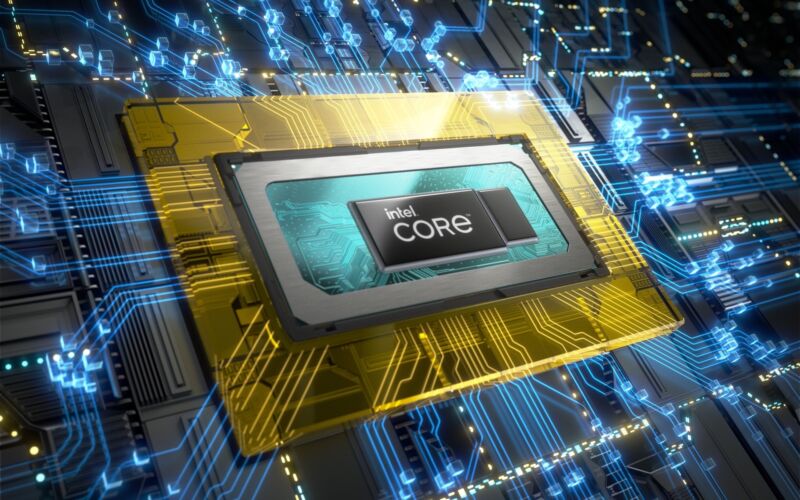
Enlarge / Intel's 12th-generation Core CPUs use different types of CPU cores for different tasks. That hybrid architecture continues to cause problems for some software. (credit: Intel)
Earlier this week, some people waiting to take the bar exam received a message from ExamSoft, the company that makes the Examplify software that many states use to administer the exam: PCs with Intel's latest 12th-generation Core processors are "not currently supported" because they were "triggering Examplify's automatic virtual machine check." The company's suggested solution was that people find another device to take the test with, a frustrating and unhelpful "workaround" for anyone with a new computer.
As pointed out by The Verge, Examsoft's system requirements page for its software provides no additional detail, simply reiterating that 12th-gen CPUs aren't currently supported and that you aren't allowed to run the Examplify software within a virtual machine. But it's not the first time a problem like this has surfaced, and the culprit is almost certainly the hybrid CPU architecture that Intel is using in most 12th-gen chips.
In previous generations, all of the cores in a given Intel CPU have been identical to one another: same design, same performance, same features. Clock speed and power usage would ramp up and down based on what the computer was doing at any given time, but the cores themselves were all the same and could be treated that way by the operating system. In 12th-gen chips, CPUs come with a mix of completely different processor cores: large, fast performance cores (or P-cores) handle the heavy lifting, while smaller, low-power efficiency cores (or E-cores) handle lighter tasks. But because operating systems and most apps are used to assuming that all CPU cores in a given system are the same, software has needed to be modified to tell the difference between the two.
Source: Hacker News
Source: Ars Technica

Some microprocessors from Intel and AMD are vulnerable to a newly discovered speculative execution attack that can covertly leak password data and other sensitive material, sending both chipmakers scrambling once again to contain what is proving to be a stubbornly persistent vulnerability.
Researchers from ETH Zurich have named their attack Retbleed because it exploits a software defense known as retpoline, which chipmakers introduced in 2018 to mitigate the harmful effects of speculative execution attacks. Speculative execution attacks, also known as Spectre, exploit the fact that when modern CPUs encounter a direct or indirect instruction branch, they predict the address for the next instruction they’re about to receive and automatically execute it before the prediction is confirmed. Spectre works by tricking the CPU into executing an instruction that accesses sensitive data in memory that would normally be off-limits to a low-privileged application. Retbleed then extracts the data after the operation is canceled.
Retpoline works by using a series of return operations to isolate indirect branches from speculative execution attacks, in effect erecting the software equivalent of a trampoline that causes them to safely bounce. Stated differently, a retpoline works by replacing indirect jumps and calls with returns, which many researchers presumed weren’t susceptible. The defense was designed to counter variant 2 of the original speculative execution attacks from January 2018. Abbreviated as BTI, the variant forces an indirect branch to execute so-called “gadget” code, which in turn creates data to leak through a side channel.
Read 14 remaining paragraphs | Comments
Source: Ars Technica

Enlarge (credit: Getty Images)
A number of course-altering US Supreme Court decisions last month—including the reversal of a constitutional right to abortion and the overturning of a century-old limit on certain firearms permits—have activists and average Americans around the country anticipating the fallout for rights and privacy as abortion “trigger laws,” expanded access to concealed carry permits, and other regulations are expected to take effect in some states. And as people seeking abortions scramble to protect their digital privacy and researchers plumb the relationship between abortion speech and tech regulations, encryption proponents have a clear message: Access to end-to-end encrypted services in the US is more important than ever.
Studies, including those commissioned by tech giants like Meta, have repeatedly and definitively shown that access to encrypted communications is a human rights issue in the digital age. End-to-end encryption makes your messages, phone calls, and video chats unintelligible everywhere except on the devices involved in the conversations, so snoops and interlopers can’t access what you’re saying—and neither can the company that offers the platform. As the legal climate in the US evolves, people who once thought they had nothing to hide may realize that era is now over.
Read 12 remaining paragraphs | Comments
Source: OSNews
On Tuesday, Parliament held the final vote on the new Digital Services Act (DSA) and Digital Markets Act (DMA), following a deal reached between Parliament and Council on 23 April and 24 March respectively. The two bills aim to address the societal and economic effects of the tech industry by setting clear standards for how they operate and provide services in the EU, in line with the EU’s fundamental rights and values.
The Digital Services Act was adopted with 539 votes in favour, 54 votes against and 30 abstentions. The Digital Markets Act – with 588 in favour, 11 votes against and 31 abstentions.
The DSA and DMA will fundamentally change the way big technology companies operate, and as consumers we’ll enjoy the fruits of far less lock-in and more competition. Things like alternative application stores and sideloading on iOS, or interoperability between messaging services, are going to be amazing.