Source: Schneier on Security
The New York Times is reporting on the NSA's phone metadata program, which the NSA shut down last year:
A National Security Agency system that analyzed logs of Americans' domestic phone calls and text messages cost $100 million from 2015 to 2019, but yielded only a single significant investigation, according to a newly declassified study.
Moreover, only twice during that four-year period did the program generate unique information that the F.B.I. did not already possess, said the study, which was produced by the Privacy and Civil Liberties Oversight Board and briefed to Congress on Tuesday.
[...]
The privacy board, working with the intelligence community, got several additional salient facts declassified as part of the rollout of its report. Among them, it officially disclosed that the system has gained access to Americans' cellphone records, not just logs of landline phone calls.
It also disclosed that in the four years the Freedom Act system was operational, the National Security Agency produced 15 intelligence reports derived from it. The other 13, however, contained information the F.B.I. had already collected through other means, like ordinary subpoenas to telephone companies.
The report cited two investigations in which the National Security Agency produced reports derived from the program: its analysis of the Pulse nightclub mass shooting in Orlando, Fla., in June 2016 and of the November 2016 attack at Ohio State University by a man who drove his car into people and slashed at them with a machete. But it did not say whether the investigations into either of those attacks were connected to the two intelligence reports that provided unique information not already in the possession of the F.B.I.
This program is legal due to the USA FREEDOM Act, which expires on March 15. Congress is currently debating whether to extend the authority, even though the NSA says it's not using it now.
 Photo by Leon Neal/Getty Images
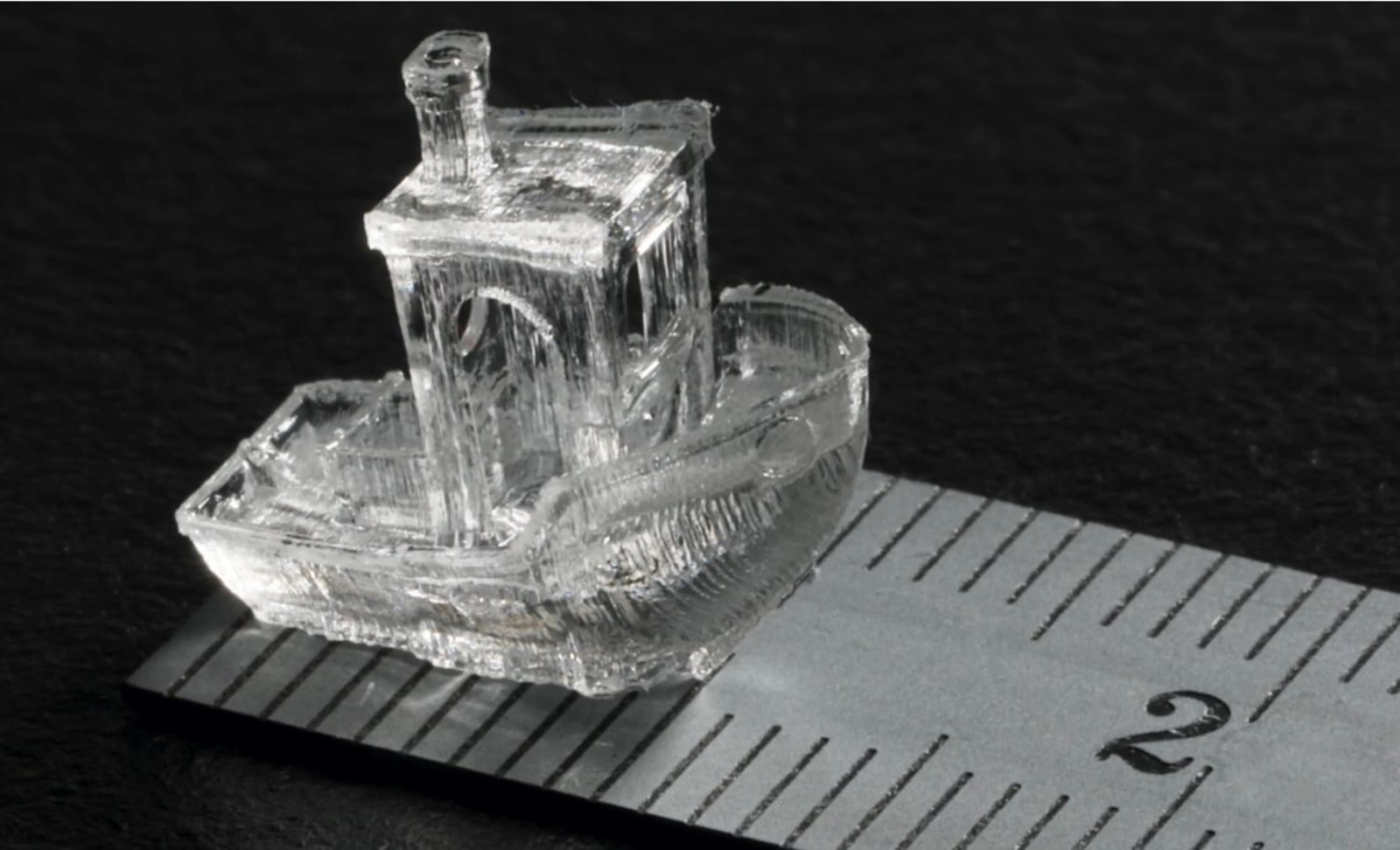 When you think of 3D printing, you probably imagine a structure being created layer by layer, from the bottom up. Now, researchers from Switzerland's EPFL say they have developed a completely new way of creating 3D objects, with unprecedented resolut...