Article note: There have been plenty of disappointments for B5 followups (...both because some didn't come to fruition and because some probably shouldn't have), this sounds both promising and credible.
Image: Warner Bros. Animation
Babylon 5 is coming back as an animated movie, series creator J. Michael Straczynski revealed last week, and today The Hollywood Reporter has the exclusive on what it’s about: Sheridan traveling through the multiverse in search of a way home.
The basic synopsis, via THR:
“Travel across the galaxy with John Sheridan as he unexpectedly finds himself transported through multiple timelines and alternate realities in a quest to find his way back home. Along the way he reunites with some familiar faces, while discovering cosmic new revelations about the history, purpose, and meaning of the Universe.”
As Straczynski hinted, many of the original surviving cast members are returning, including Bruce Boxleitner (Sheridan), Claudia Christian...
Article note: Because perverse incentives.
The vendors aren't building devices for customers, they're building profit-seeking vessels for VCs and megacorps.
If you build good devices, they need to work offline, without a subscription or external connectivity, and they need to freely interoperate over open standardized interfaces... and those conflict with the profit-taking misfeatures that attract funding.
Article note: Connected health gadgets are a mistake.
The value proposition to the manufacturer is almost entirely in terms of data harvesting, and health data is about as personal as it gets.
Plus, they're now bricking the devices since they didn't monetize them in the reprehensible ways they considered.
...Now can we get some decent offline health trackers?
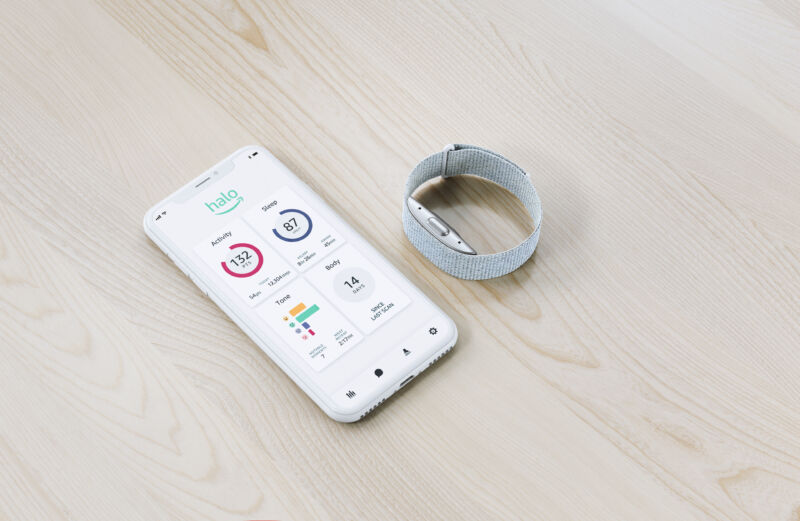
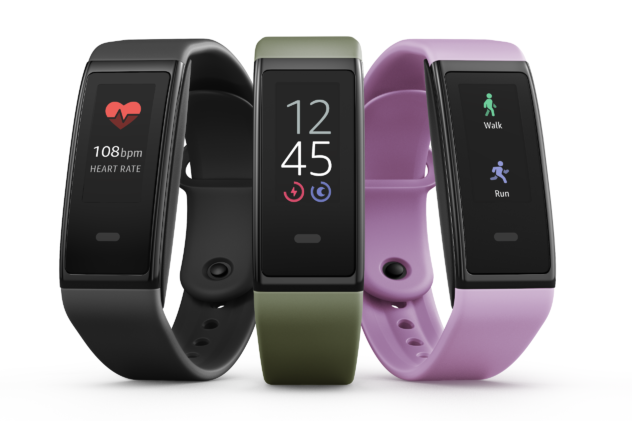
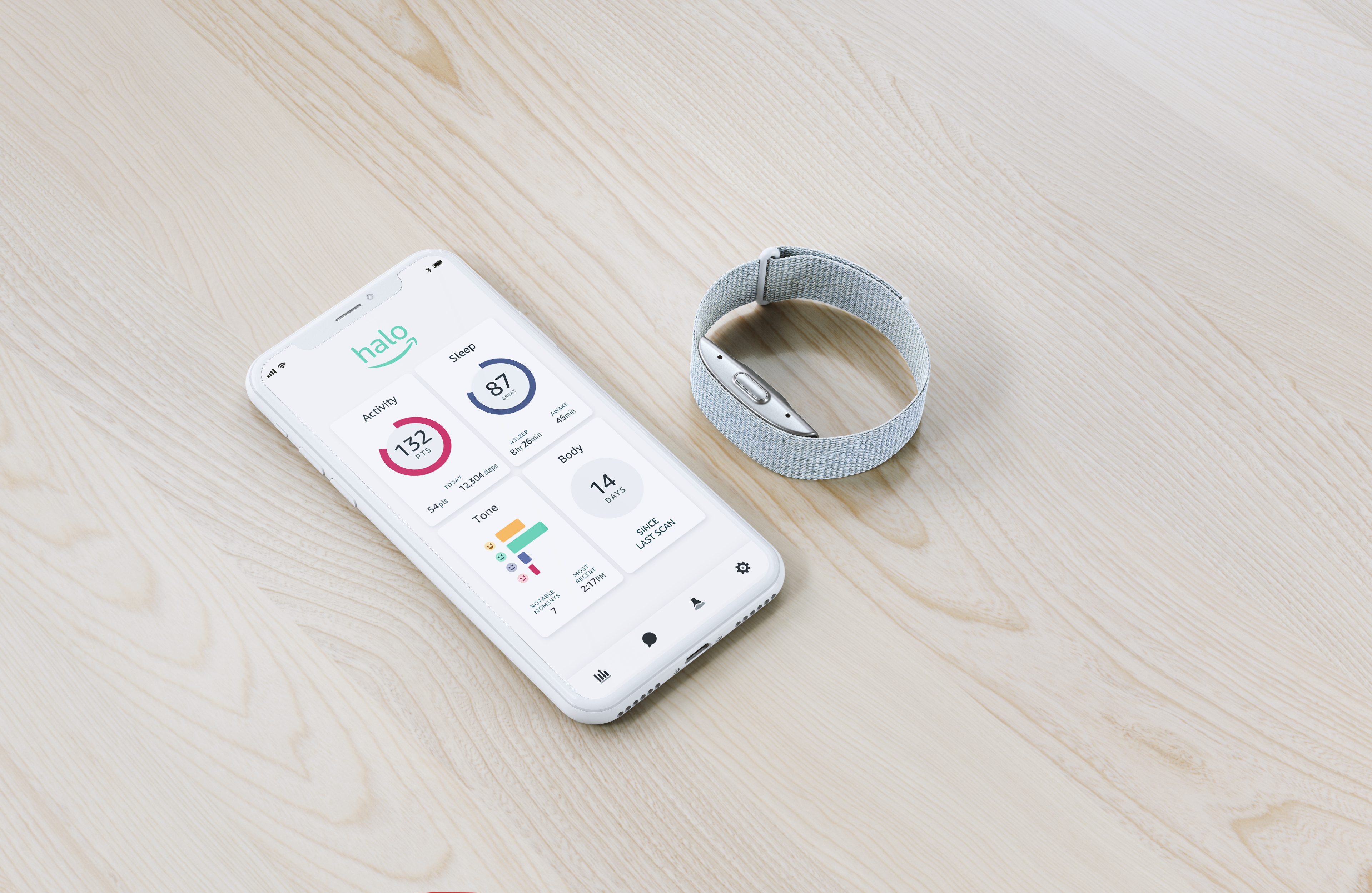
Amazon is discontinuing its Halo project, including the Band and View fitness trackers and the Rise bedside sleep tracker, making the devices useless on August 1. Amid the company's largest-ever wave of layoffs and reports that even the popular Alexa voice assistant has failed to bring in money, this wasn't surprising. It's still sad, though, to realize that countless devices will become obsolete and at huge risk of becoming e-waste (despite Amazon telling customers to recycle devices through its recycling programs, all costs covered).
But perhaps it's just as well, because a report from The Verge today claims to peer into Halo's last attempts at survival. And the Halo that Amazon reportedly tried to realize is one we're happy not to encounter.
Halo reportedly creeped out its own creators
Reported plans for Halo could have pushed products to gather more data on how users exercise in order to provide virtual rewards, to offer recommendations, and to track performance. However, the features Amazon is said to have explored sound potentially invasive, collecting uniquely personal data.
Article note: Looks like the intrusive cloud-based health tracker gold rush is over and the fad-chasing tech giants are out. Maybe it turned out that the collected data wasn't as saleable as expected.
Can we get some fitness devices that aren't IoT cloud-tied bullshit now?
Amazon is giving up on its health-focused Halo devices. The original Halo Band and the Halo View fitness trackers, as well as the Halo Rise bedside sleep tracker and the products' supporting app, will all "no longer function" on August 1, Amazon confirmed today.
Amazon's Halo devices also worked with a Halo subscription service to let users manage health insights from the gadgets. Amazon's pages for the Halo subscription and devices are no longer active.
In a blog post confirming the news, Amazon shared an email sent to Halo customers. Part of it discusses refunds for recent purchases:
Article note: This is written through a _super_ warped lens, possibly the lensing effects of David Patterson's ego.
Article talks about VLIWs as "The Next RISC" without Josh Fisher's Trace Scheduling and MultiFlow, or Apollo's Prism or Cydrome or...basically anything that happened in the 80s. It doesn't even mention the dead elephant in the room, Itanium (yeah yeah, Intel liked "EPIC" to describe their even longer words, it's still a static VLIW, and it still didn't really work).
It also avoids comparisons to the "modern" (...starting with the Nexgen NX586->AMD K6 and Intel P6 designs from around the time Transmeta was founded in '95) superscalar multiple-issue out-of-order dynamic-JIT-in-hardware type designs that largely beat firmware code-morphing (and everything else) out because even though they worked on a small peephole of instructions with dumb heuristics, they could do dynamic shit to keep the pipeline full.
Plus, I now object to anyone who acts like RISC-V is "one" instruction set, it's a pile of disjoint extensions, many of which implement ideas which were neither new nor good at the time they were bolted on.
The 9th Circuit Court of Appeals has affirmed last year's district court ruling that Apple did not violate antitrust laws by forcing iOS developers to use its App Store and in-app payment systems. The decision is yet another major blow to Epic Games, which first challenged those Apple policies in a 2020 lawsuit.
"There is a lively and important debate about the role played in our economy and democracy by online transaction platforms with market power," the court wrote. "Our job as a federal court of appeals, however, is not to resolve that debate — nor could we even attempt to do so. Instead, in this decision, we faithfully applied existing precedent to the facts."
In a highly technical 91-page ruling issued Monday, the appeals court affirmed Apple's argument that the case centered around the market for mobile game transactions, rather than Epic's proposed definition of "aftermarkets of iOS app distribution and iOS in-app payment solutions." That market definition was a key point of contention in the original case since it establishes that Apple faces competition from other mobile ecosystems like Android.
Article note: The _extra_ reason to oppose DRM: HDCP has been (technologically) completely broken and more-useless-than-it's-basic-idea in public for well over a decade now, but it's legalistic remnants are still causing problems for designing consumer electronics.
Article note: The ChromeOS Google service roach motel isn't the best or worst environment on the market, and the "supported and managed until suddenly trash" lifecycle is grim, but it sure makes near- or past- AUE Chromebooks a cheap, sturdy option for folks willing to flash firmware. I have one and it's a good toy to just fiddle with shit on, and will probably pick up a couple others eventually.
Because all the (recent, x86) Chromebooks essentially run boot via Coreboot, they're pretty gracefully hackable (see mrchromebox.tech)
Enlarge/ US PIRG's "Chromebook Churn" report casts a harsh spotlight on flaws in Chromebook repairability and longevity. (credit: Scharon Harding)
Google is in the US Public Interest Research Group (PIRG) hot seat. This week, the nonprofit published its "Chromebook Churn" [PDF] report, pointing a finger at Google for enabling Chromebooks that “aren’t designed to last.” It highlighted Chromebook quirks, like seemingly pointless hardware tweaks across models that challenge parts-sourcing and automatic update expiration (AUE) dates, as examples of the repair-averse Chromebook culture Google has enabled. For target Chromebook markets, like schools, that opt for Chromebooks to save money, long-term costs may outweigh the immediate savings, PIRG’s analysis concluded.
The report focuses on Chromebooks in schools and is based on an unspecified number (we've reached out to PIRG for a firm head count) of interviews with "school IT directors, technicians, journalists, repair shop owners, parts suppliers, and teachers," as well as a "five-question survey with 13 school IT administrators and technicians." The sample size could be much larger, but the details in the report are also based on undisputed characteristics of ChromeOS devices. And while PIRG's paper emphasizes the impact this all has for schools, especially considering the influx of Chromebooks purchased for schools during the COVID-19 pandemic's height and beyond, it's food for thought for any current or prospective Chromebook owners or people who like to vote with their dollar.
Sneaky design changes hinder repairs
The report, written by PIRG's Designed to Last Campaign director, Lucas Rockett Gutterman, argues that because Chromebooks are largely web-based and don't vary in power as much as other laptops, it should be "easy" to offer modular designs that allow for parts to be shared across Chromebook models. Indeed, Framework's modular Chromebook proves this is possible. But in its "Failing the Fix" [PDF] report from February, PIRG reported that Chromebooks have an average French repairability index score of 5.8 out of 10, compared to 6.9 for all non-Chromebook laptops.