
Source: OSNews
Back in the ’90s and very early 2000s, a whole market segment of computers existed that we don’t really talk about anymore today: the UNIX workstation. They were non-x86 machines running one of the many commercial UNIX variants, and were used for the very high end of computing. They were expensive, unique, different, and quite often incredibly overengineered.
Countless companies made and sold these UNIX workstation. SGI was a big player in this market, with their fancy, colourful machines with MIPS processors running IRIX. There was also Sun Microsystems (and Oracle in the tail end), selling ever more powerful UltraSPARC workstations running Solaris. Industry legend DEC sold Alpha machines running Digital UNIX (later renamed to Tru64 UNIX when DEC was acquired by Compaq in 1998). IBM of course also sold UNIX workstations, powered by their PowerPC architecture and AIX operating system.
As x86 became ever more powerful and versatile, and with the rise of Linux as a capable UNIX replacement and the adoption of the NT-based versions of Windows, the days of the UNIX workstations were numbered. A few years into the new millennium, virtually all traditional UNIX vendors had ended production of their workstations and in some cases even their associated architectures, with a lacklustre collective effort to move over to Intel’s Itanium – which didn’t exactly go anywhere and is now nothing more than a sour footnote in computing history.
Approaching roughly 2010, all the UNIX workstations had disappeared. Development of MIPS, UltraSPARC (for workstations), Alpha, and others had all been wound down, and with a few exceptions, the various commercial UNIX variants started to languish in extended support purgatory, and by now, they’re all pretty much dead (save for Solaris). Users and industries moved on to x86 on the hardware side, and Linux, Windows, and in some cases, Mac OS X on the software side.
Like what we do? Become an OSNews Patreon and support our continued work!
I’ve always been fascinated by these UNIX workstations. They were this mysterious, unique computers running software that was entirely alien to me, and they were impossibly expensive. Over the years, I’ve owned exactly one of these machines – a Sun Ultra 5 running Solaris 9 – and I remember enjoying that little machine greatly. I was a student living in a tiny apartment with not much money to spare, but back in those days, you couldn’t load a single page on an online auction website without stumbling over piles of Ultra 5s and other UNIX workstations, so they were cheap and plentiful.
Even as my financial situation improved and money wasn’t short anymore, my apartment was still far too small to buy even more computers, especially since UNIX workstations tended to be big and noisy. Fast forward to the 2020s, however, and everything’s changed. My house has plenty of space, and I even have my own dedicated office for work and computer nonsense, so I’ve got more than enough room to indulge and buy UNIX workstations. It was time to get back in the saddle.
But soon I realised times had changed.
Over the past few years, I have come to learn that If you want to get into buying, using, and learning from UNIX workstations today, you’ll run into various problems which can roughly be filed into three main categories: hardware availability, operating system availability, and third party software availability. I’ll walk through all three of these and give some examples that I’ve encountered, most of them based on the purchase of a UNIX workstation from a vendor I haven’t mentioned yet: Hewlett Packard.
Hardware availability: a tulip for a house
The first place most people would go to in order to buy a classic UNIX workstation is eBay. Everyone’s favourite auction site and online marketplace is filled with all kinds of UNIX workstations, from the ’80s all the way up to the final machines from the early 2000s. You’ll soon notice, however, that pricing seems to have gone absolutely – pardon my Gaelic – absolutely batshit insane.
Are you interested in a Sun Ultra 45, from 2005, without any warranty and excluding shipping? That’ll be anywhere from €1500 to €2500. Or are you more into SGI, and looking to buy a a 175 Mhz Indigo 2 from the mid-’90s? Better pony up at least €1250. Something as underpowered as a Sun Ultra 10 from 1998 will run for anything between €700 and €1300. Getting something more powerful like an SGI Fuel? Forget about it.
Going to refurbishers won’t help you much either. Just these past few days I was in contact with a refurbisher here in Sweden who is charging over €4000 for a Sun Ultra 45. For a US perspective, a refurbisher like UNIX HQ, for instance, has quite a decent selection of machines, but be ready to shell out $2000 for an IBM IntelliStation POWER 285 running AIX, $1300 for a Sun Blade 2500, or $2000-$2500 for an SGI Fuel, to list just a few.
Of course, these prices are without shipping or possible customs fees. It will come as no surprise that shipping these machines is expensive. Shipping a UNIX workstation from the US – where supply is relatively ample – to Europe often costs more than the computer itself, easily doubling your total costs. On top of that, there’s the crapshoot lottery of customs fees, which, depending on the customs official’s mood, can really be just about anything.
I honestly have no idea why pricing has skyrockted as much as it has. Machines like these were far, far cheaper only 5-10 years ago, but it seems something happened that pushed them up – quite a few of them are definitely not rare, so I doubt rarity is the cause. Demand can’t exactly be high either, so I doubt there’s so many people buying these that they’re forcing the price to go up. I do have a few theories, such as some machines being absolutely required in some specific niche somewhere and sellers just sitting on them until one breaks and must be replaced, whatever the cost, but nothing concrete.
In the end, though, the right price is whatever people are willing to pay, but I have a feeling we’re looking at some serious tulipmania here. UNIX workstations are pretty much scrap metal, and have no real use other than for enthusiasts and the odd collector here and there. I’m saddened there are, apparently, enough of us who are ready to pay through the nose for what are essentially loud paperweights with power cords.
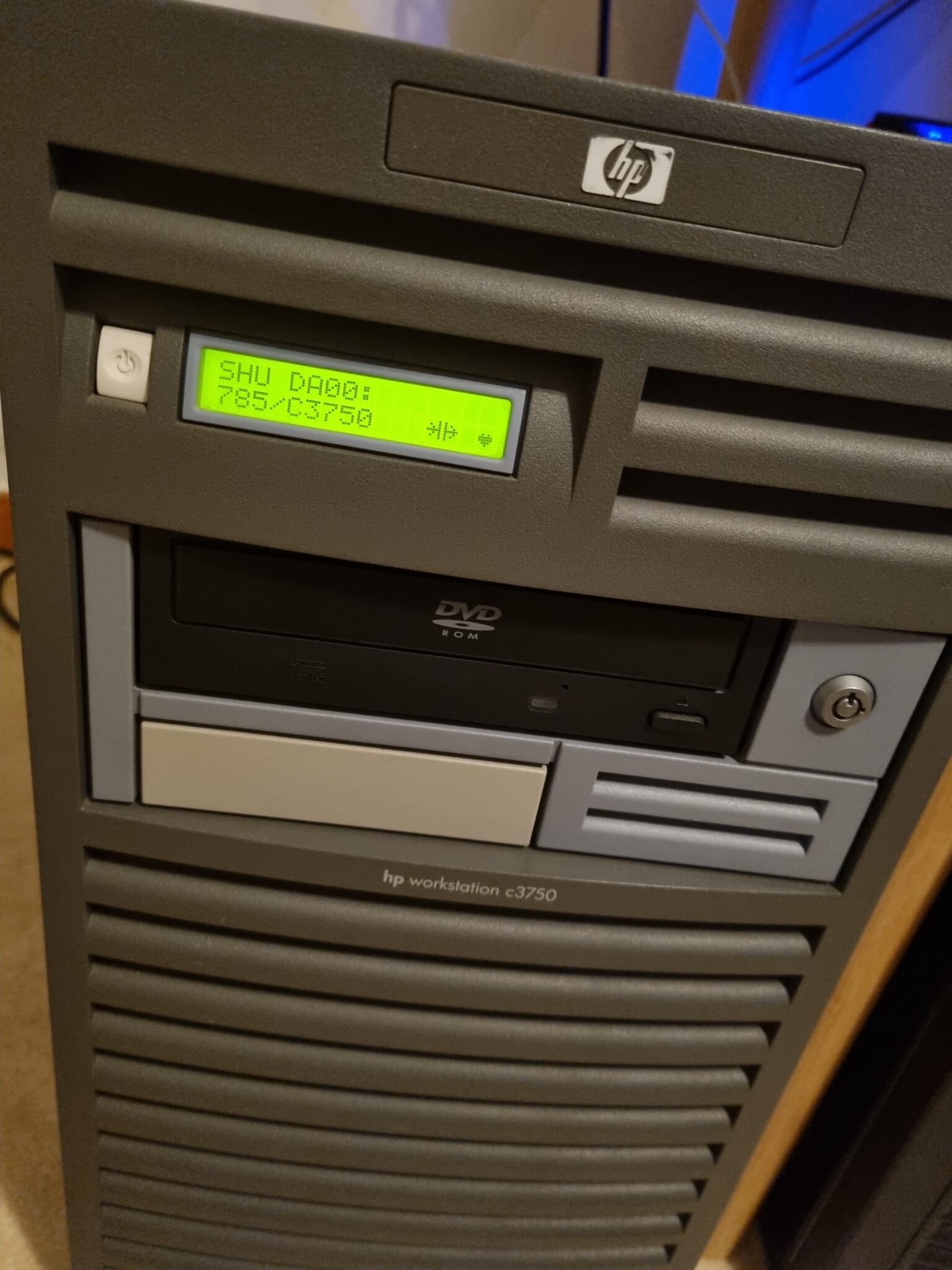
In the end, I got insanely lucky on eBay, and in April 2021 I managed to score an HP Visualize c3750 PA-RISC workstation for a mere €70 – a price I’m still not entirely sure wasn’t a mistake. The professional eBay seller I bought it from also seemed to have realised he made some mistake, because it took a lot of back and forth and pressure to get him to actually ship the computer.
After he finally shipped it and it arrived on my doorstep – I apologised to the mailwoman profusely since she had to lug that thing around – and I was happy to finally have my hands on this originally expensive piece of hardware.
And then things got worse.
Operating system availability: a pirate’s life for me
The c3750 I bought was entirely designed to run HP-UX, Hewlett Packard’s commercial UNIX variant. Sadly, my machine shipped without the software, either installed or on plastic, so I had to somehow get my hands on the installation media myself. This is when I discovered just how hard it is to get your hands on some of the commercial UNIX variants.
In my naiveté, I just assumed I’d be able to go to the HP or HPE – HP’s enterprise arm they spun of a few years ago – website, enter my model number or perhaps serial number, and gain access to downloadable installation media, or at least an option to perhaps order the media for a small fee and have them shipped to my house. These were expensive enterprise machines, after all, and if there’s one thing companies like HP are good at, it’s supporting expensive enterprise stuff for a long time.
I was wrong.
First of all, there is no way to download HP-UX 10.20, 11.00 or 11i v1 (also known as 11.11), the versions of HP-UX supported on my PA-RISC machine. On top of that, there is also no way to order installation media. In fact, there’s no official way of procuring these versions of HP-UX in any way, shape, of form. I even contacted HPE specifically about this, but the communication petered out very prematurely.
So, I had no choice but to explore less… Legal means of getting HP-UX. Archive.org was the obvious choice, but none of the 11.11 versions I found there seemed to work. I also tried various other avenues, but to no avail. Every few weeks or months I would resume my search, but I never got any closer to a version of HP-UX installation media capable of booting and installing on my hardware.
Almost 18 months after having originally purchased the machine, I resorted to asking my new followers on Mastodon – thanks emerald boy, I guess? – and the response was honestly overwhelming. I talked to everyone from fellow enthusiasts who were digging through their CD/ISO piles for me, to former system administrators experienced with HP-UX, all the way to former HP engineers who actually built and tested machines like mine back in the day.
They were incredibly helpful, and I’m very grateful for all their help, advice, stories, and tips. Some people even went so far as to grant me access to HP-UX ISOs they had stored on various private cloud services so I could try those out. After a lot of trying and back-and-forths, in some dark corner of the web, I found some ISOs that turned out to actually work. I finally had working installation media.
And then things got worse.
My installation media were dated 2003 or 2004, but from my 18 months of researching up on HP-UX 11.11’s lifecycle, I knew there was a massive amount of patches I could apply to fix bugs, plug security holes, update certain open source tools, and so on. These patches were distributed in various forms over the years, usually on CD-ROMs and later DVDs. These were even harder to find than HP-UX itself.
Much like with the operating system, HPE does not seem to list these patches anywhere, and there’s pretty much no official documentation available. You have to do a lot of searching, digging, and collating from unofficial sources to get a vague grasp of what you need or what’s applicable, and eventually I think I managed to get some grip on what I needed to look for. Much like with HP-UX itself, I eventually managed to find the right Support Plus and Hardware Enablement ISOs through a combination of Archive.org and spelunking through the private cloud collections I was given access to.
There was once a tool to download patches automatically from HP’s servers, HP-UX Software Assistant (SWA), but I have no idea if it supported HP-UX 11.11. Not that it matters – the tool is nowhere to be found, there’s no official documentation, and as far as I can gather, even if you were to find it and use it, HPE no longer serves the patches online anyway, so you wouldn’t be able to use it. It’s just another example of a major computer and software company not taking care of its heritage.
Regardless, as far as I have determined through my research, my HP Visualize c3750 – with its fancy 875MHz PA-8700+ PA-RISC processor and upgraded to 3GB of RAM and fitted with the fastest GPU I could find at the time, the FX10pro – now runs the most up-to-date version of HP-UX 11i V1 (11.11), the last version this machine supports, with all the latest patches. No thanks to the company that actually made the hardware and the software.
And then things got worse.
Third party software availability: black hole
Once I had the hardware, the operating system, and all of its various patches, it was time to find applications and programs to actually run on it. Working my way up from the bottom, I figured the I’d start getting some of the base open source tools we’ve come to expect from any UNIX-like system. Luckily, I had already discovered the HP-UX Porting and Archive Centre, which is set up and maintained to do just that – to make public domain, freeware and open source software more readily available to users of Hewlett Packard UNIX systems.
Sadly, it turns out that the Centre simply does not have the means to support anything but the latest version of HP-UX – in this case, HP-UX 11i v3, running exclusively on Itanium 2. Any packages for older versions and architectures are either deleted, deprecated, or only downloadable manually – you can’t use their handy dependency resolver and downloader script either. I fully understand this – the HP-UX community is probably quite small, and building, maintaining, and serving these packages isn’t free. I’m already thankful the Centre exists in the first place.
The next step up would be actual applications, the kind of software everyday users would use back in the day when these machines were new. Here things really started to get frustrating. I’m not going to detail every application I tried to get working, and instead focus on two different ones that highlight the issues you run into very well: Pro/ENGINEER and SoftWindows.
Pro/ENGINEER is a CAD software suite that was available on a variety of platforms, including HP-UX. I have no experience with nor understanding of CAD and industrial design software, but I wanted to get it running just to get an idea of what such software would look like when my machine was new. Finding a copy of Pro/ENGINEER for UNIX isn’t hard – several versions are available on Archive.org, including version 17, which I think might have been the last version available for HP-UX (but I’m not sure, since information is scant).
Installing Pro/ENGINEER 17 from the version uploaded to Archive.org is a breeze – it’s technically for an older version of HP-UX, but in my use of Hewlett Packard’s UNIX I’ve learnt it has excellent backwards compatibility, and any software that I’ve tried for versions 9.x and 10.x also works just fine on 11i. Once you hit Pro/ENGINEER’s licensing step, though, you hit a brick wall. Software like this doesn’t use simple serial keys, but instead uses more complex licensing schemes and software. Of course, these licensing schemes have long since expired, there’s no store that still sells them, and even the “demo” option apparently had an end date and stopped working a long time ago.
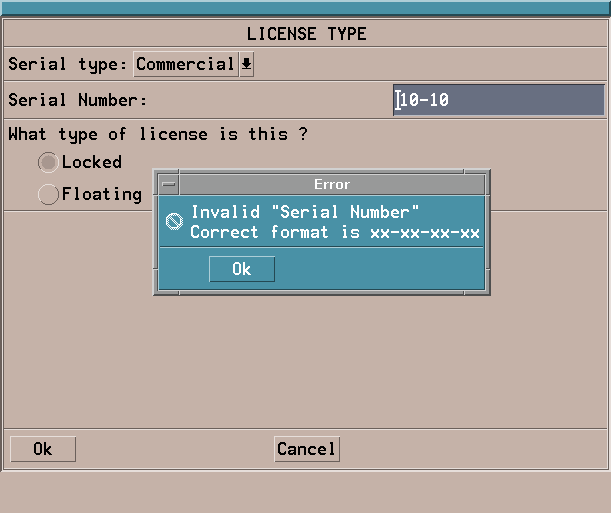
The company behind Pro/ENGINEER, PTC, still exists and sells a variety of professional CAD-related software packages, so I decided to contact them to see if we could work something out, such as maybe making a universal working license available for these older versions that anybody could use. I got a reply from a sales rep interested in selling me the current version, and after restating my question in a follow-up, communication went dead.
Another piece of software I was incredibly eager to try was something called SoftWindows. SoftWindows was a software package that combined the SoftPC x86 emulator with a copy of Windows, allowing you to run software for Windows 3.x, 95, and 98 on any of the supported platforms, including the carious commercial UNIX variants. The company behind SoftPC and SoftWindows, Insignia, even entered into an exclusive agreement with Microsoft whereby they gained access to the Windows source code to further improve their software offering, and Microsoft made use of SoftPC – or, at least, parts of it – for the x86 compatibility layers in the various early non-x86 versions of Windows NT.
The first problem I ran into was that I could not find the version of SoftWindows for HP-UX that came with Windows 95, which I think is the last version they made for the platform. I also tried to find SoftPC itself, but that proved futile as well. This Windows 95 version definitely existed – there’s detailed documentation everywhere – but the software itself seems to have disappeared. This was a bummer, and further illustrates the need for software preservation efforts.
Luckily, an older version of SoftWindows for UNIX can be found on Archive.org – SoftWindows 2.0 for UNIX. This version is a bit older, and includes Windows 3.11 and MS-DOS 6.22, and can be installed on a variety of UNIX variants, including HP-UX. Even though this is technically designed for an older version of HP-UX, it, too, installs without issue on HP-UX 11i. However, the keen-eyed among you may have noticed an ominous line in the Archive.org listing: “It uses FLEXlm so yeah good luck”.
FLEXlm is what is known as a software license manager, and was used by various software packages for UNIX (and other platforms) to manage their licenses. Licenses could be locked to a single computer, or distributed through a license server and allocated as-needed. In the case of SoftWindows 2.0 for UNIX, the Insignia FLEXlm License Manager window pops up at the end of the installation and whenever you start SoftWindows, asking for a serial number, an expiry date, and an authorisation code. In order to get the authorisation code as a single user, you had to complete your warranty card, add your serial number, FLEXlm HostID (a unique identifier tied to your machine), and server name, and fax it to Insignia, who would then provide you with the authorisation code.
It will come as no surprise that this no longer works. Not only do I have no clue how to send a fax, the listed phone numbers are from the ’90s and are no longer useful because Insignia no longer exists; it was acquired by a company called FWB Software in 1999, which seems to have ceased operations somewhere in 2002 or 2003 (although I can’t find any definitive dates). FLEXlm, the license manager, went through a few different owners and ended up at Macrovision, who eventually spun FLEXlm and related software off as Flexera, where it still resides today.
This most likely means that even if I somehow managed to find the person who holds the rights to SoftPC and SoftWindows – either the original people from Insignia or the now defunct FWB Software – they probably wouldn’t be able to even generate licenses anyway because they can’t run the original licensing software used to generate said licenses. Flexera, meanwhile, probably wouldn’t be able to generate any SoftWindows licenses either, since even if they managed to run the original licensing software to generate a valid license, they don’t own the rights to do so.
In other words, this incredibly interesting piece of software is stuck in limbo.
Pro/ENGINEER and SoftWindows are just two examples, but you’ll run into similar problems with countless other commercial software packages; they’re either impossible to find or impossible to license, or both. This is an absolute shame, since there’s a ton of fascinating pieces of commercial software for these UNIX workstations that played a huge role in all kinds of industries, from animation to industrial engineering, that have effectively disappeared into a black hole.
There are other problems you run into when trying to explore the capabilities of HP-UX, too. The lack of accessible information from HP is always a massive problem. For instance, finding a version of Firefox that runs on HP-UX 11.11 was difficult – I still don’t know which version was the last version ever made, and it took me a lot of spelunking through dodgy FTP servers and god knows where else to eventually stumble upon an HP-UX depot (the platform’s package format) of Firefox 3.5.9. It installs and runs flawlessly, but unsurprisingly, has fallen victim to the TLS apocalypse, and I have no idea if any newer versions were ever made available by HP.
Worse yet are the cases where I know HP-UX has some amazing cool ability, but due to the lack of documentation, information, and software from HP, I have simply no idea how to set that ability up or let alone use it. For instance, there’s a lot of references to HP-UX being able to use smartcard readers and even fingerprint scanners for authentication, for instance to log in, but what readers and scanners are supported? How do you set this up? What HP software do I potentially need? Who knows! HP-UX can also be used to manage and run thin clients, but which models, exactly, and how does it all work? Who knows!
At this point I doubt even HP knows. I want to buy a fingerprint scanner or smartcard reader that’s compatible with HP-UX so I can do silly things like logging in with a smartcard. I want to buy a HP-UX-compatible thin client and set it up so I can access the machine from across the house. I know HP-UX can do all these things, but getting the right software, documentation, hardware compatibility lists, and more is incredibly frustrating and hard.
Mass extinction
This whole thing has been an unpleasant experience. It has left me bitter and frustrated that so much knowledge – in the form of documentation, software, tutorials, drivers, and so on – is disappearing before our very eyes. Shortsightedness and disinterest in their own heritage by corporations, big and small, is destroying entire swaths of software, and as more years pass by, it will get ever harder to get any of these things back up and running.
What would I want HPE to do? Not much – I’m not asking for the world here. I’m not asking them to release HP-UX as open source – never going to happen – or to set up an entire sales channel just for the few enthusiasts out there interested in HP-UX. All they need to do is dump some ISO files, patch depots, and other HP-UX software, alongside documentation, on an FTP server somewhere so we can download it. That’s it. This stuff has no commercial value, they’re not losing any sales, and it will barely affect their bottom line. If they want to get fancy about, they can even set up a website to make it easier to find stuff, but that’s not necessary. And if they really want to gain some goodwill, they dump all this stuff on Archive.org.
And would it kill them to perhaps send some financial support to the the HP-UX Porting and Archive Centre?
As for all the third-party software – well, I’m afraid it’s too late for that already. Chasing down the rightsholders is already an incredibly difficult task, and even if you do find them, they are probably not interested in helping you, and even if by some miracle they are, they most likely no longer even have the ability to generate the required licenses or release versions with the licensing ripped out. Stuff like Pro/ENGINEER and SoftWindows for UNIX are most likely gone forever.
There’s this idea that as long as someone still thinks of you, if you’re still in someone’s thoughts, you are effectively immortal. People like Genghis Khan, Julius Caesar, and that one pope who exhumed his predecessor to put his corpse on trial are immortal because we still think about them, we still write about them. This doesn’t apply to software – we can think about software, write about software all we want, but if we can no longer run it, it’s dead. It’s gone.
Software is dying off at an alarming rate, and I fear there’s no turning the tide of this mass extinction.
Addendum: I fell in love with HP-UX
Originally, my intention was to review HP-UX – write about my experiences using the platform in 2022 on one of the last UNIX workstations HP ever made. Sadly, as detailed in this article, I ran into so many issues with trying to use actual software that a review simply didn’t make any sense. That being said, I do have a few things to say about this UNIX platform, and that’s what this addendum is for.
First and foremost, my biggest surprise is just how well HP-UX and the CDE desktop perform on this hardware. It’s a mere 875Mhz, but it feels much faster than that. Applications load almost instantly, and more complex software only seems to be held back by the mechanical SCSI hard drive instead of the processor or RAM. Even Firefox loads faster than you’d expect, and once loaded, web pages load acceptably.
I also really enjoyed configuring the system. HP-UX’ SAM system management tools are quite intuitive, easy to use, and very comprehensive. And even when you do have to dive into manually editing configuration files, they seem to reside in logical, consistent places, and are easy to read and edit. I’m by no means a UNIX (or even Linux) expert, but I could easily find my way around the operating system, and despite its reputation as the ugly duckling of the UNIX world, HP-UX endeared itself to me, which made the problems with finding software and documentation all the more frustrating.
I’m now seriously considering trying to get my hands on an HP Itanium 2 workstation, the HP zx6000, just so I can move up to HP-UX 11i v2, experience better performance, and perhaps get more software to run. I feel like I’m going down the rabbit hole now, and there’s no way back.